
A Historical Perspective
Before I start with this series, I want to talk about the reason behind these blogs. I often read and hear people who believe that nudity is for primitives and animals. An example of this happened a couple of weeks ago, where a user on a social network commented on my blog “Stop Worrying About Being Naked!” I posted, saying that nudity is for animals. Do you think they’re right? Are we, the nudists, primitives or animals? Before you answer, I invite you to read this series of blogs exploring this concept. Then, after you finish this series, perhaps I can paint a better and more precise picture of nudity and its relationship with human civilization for you.
In the era of XHamster, PornHub, and millions of other porn sites and media outlets that occupy the internet’s top rankings, I can’t blame most people for taking an aggressive yet uncultivated position against nudity. In this blog, I’ll go over nudity historically and try to connect the dots with our human civilizations.
How did human history treat nudity?
Before we go ahead and start our journey in this part of “Nudity and Human Civilization,” I would like to talk about one quick point. Upon reading and studying the historical view of nudity, I discovered that most research focused on the artistic aspects of nudity. While I respect these studies, I find their assessments incomplete; there are many more aspects to nudity. But in general, let’s accept that researching nudity historically is very difficult due to the giant list of taboos around the subject, which makes it difficult for most writers and historians to talk freely, courageously, and objectively about it. So, I will have multiple posts under the same big title, “Nudity and Human Civilization,” trying to cover as many aspects as possible.
The history of nudity, where do we start? Pre-history? Mesopotamia? Ancient Egypt? The Far East, China, and Japan? Greece? I know! Why don’t we begin with this question: When and why did we “the homo sapiens” start wearing clothes? Based on human archeological history, we are about three hundred thousand years old, but humanity didn’t begin wearing clothes until about 170,000 – 40,000 years ago. A group of scientists who studied the genetic analysis of clothing lice clarified the big gap in this estimation. They said:
“Clothing use is an important modern behavior that contributed to the successful expansion of humans into higher latitudes and cold climates. Previous research suggests that clothing use originated anywhere between 40,000 and 3 Ma, though there is little direct archaeological, fossil, or genetic evidence to support more specific estimates. Since clothing lice evolved from head louse ancestors once humans adopted clothing, dating the emergence of clothing lice may provide more specific estimates of the origin of clothing use. Here, we use a Bayesian coalescent modeling approach to estimate that clothing lice diverged from head louse ancestors at least by 83,000 and possibly as early as 170,000 years ago. Our analysis suggests that the use of clothing likely originated with anatomically modern humans in Africa and reinforces a broad trend of modern human developments in Africa during the Middle to Late Pleistocene.” – Origin of Clothing Lice Indicates Early Clothing Use by Anatomically Modern Humans in Africa. Melissa A. Toups, Andrew Kitchen, Jessica E. Light, and David L. Reed
Is there a connection between clothing and civilization?
Clothing didn’t come alone; human beings added jewelry, body paint, tattoos, and other things to cover their bodies for many reasons. You can read more about this in “Seeing Through Clothes” by Anne Hollander. Based on that, some specialists consider that the widespread habitual use of clothing was one of the signs that marked the end of the Neolithic period and the beginning of civilization. Dr. Julie M. Asher-Greve and Deborah Sweeney, in their essay, “On Nakedness, Nudity, and Gender in Egyptian and Mesopotamian Art,” both agree with the assessment above. But, in my opinion, I think that the connection between the use of clothing and civilization is off, and for a couple of reasons:
- Human societies treated clothing and adornment symbolically to show the person’s class: The less the clothing, the lower the class. You may think that this was a part of the historical civilization movement, but I would argue that clothing wasn’t originally designed to discriminate between social classes. Instead, as we mentioned before, clothing protected us against severe climates.
- Around the same period, humanity started to connect nudity and sexuality, which also goes against the main reason for creating clothes in the first place
We invented something with a specific reason in mind. Thousands of years later, a group of people used the invention for a different reason; clothing protected, but people later used it to discriminate. This proves that clothing wasn’t designed to be used for sexual reasons or class discrimination. Now, as we answered the when and why we started to wear clothes, let’s discover what historical evidence we have about nudity and how we understand them.
Ancient history and nudity:
Because we’ve answered the when and the why behind the use of clothing, now comes the time for us to look into the historical evidence in our hands about nudity and how we understand it. I don’t intend to recite stories or talk about nude art; I want to answer a few questions: Was nudity common in human societies? Was it an everyday thing? Was it offensive? Was it against the idea of civilization? Lastly, did human civilization plan to get rid of it?
Mesopotamia
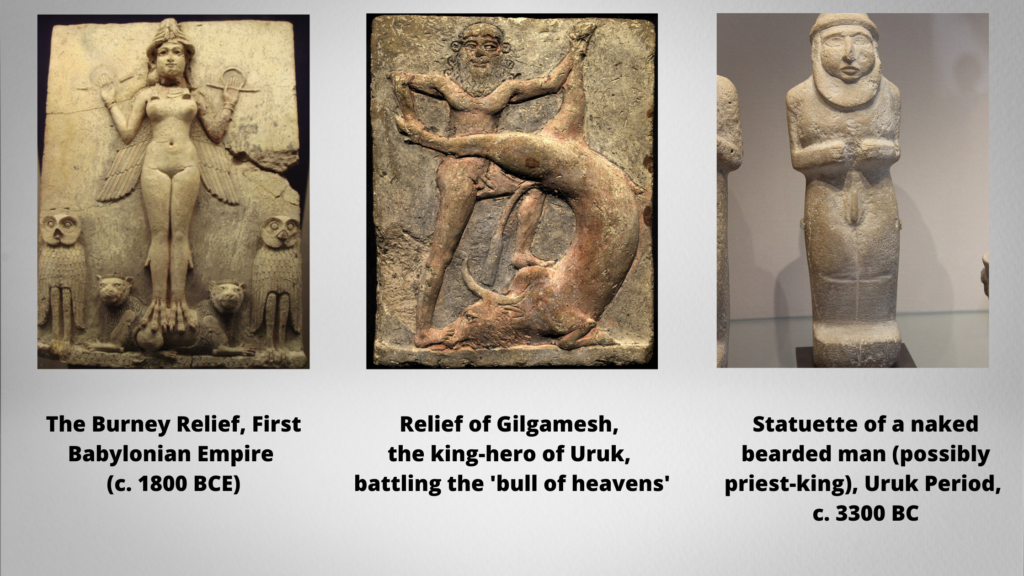
Mesopotamia is the old name of Iraq and small parts of Syria. In ancient Mesopotamia, nudity was the norm amongst the low-class and slaves, never wearing beyond a single clothing item; however, the rich put some clothes on. On the other hand, very significantly, Mesopotamia’s goddesses were naked. For example, Lilith, Ishtar (AKA Inann), Kilili (AKA Kulili), and Ereshkigal, Ishtar’s sister, were all nude. Gods, goddesses, priests, multiple classes of the Uruk period in Mesopotamia, and even Gilgamesh and his loyal friend Enkidu (famous figures in Sumerian mythology) were all naked. That never created any issues for human civilization, at least at that time.
Ancient Egypt
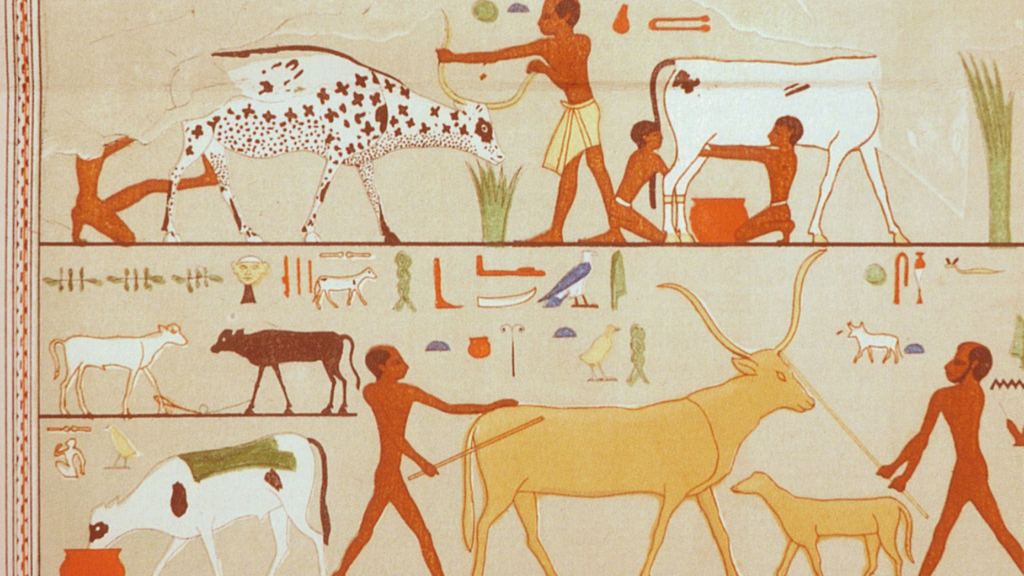
In ancient Egypt, much like Mesopotamia, the high-class usually wore more clothing than the lower classes; the low-class mainly wore the same tiny skirts, remaining bare-chested. It took until the end of the Hyksos’ rule for Egyptians to begin wearing more clothes. However, in general, women entertainers performed naked, children wore nothing until puberty, and farmers and workers were always naked.
“In Egypt, somewhat after the middle of the third millennium, both men and women are sometimes represented having stripped off their clothing for work.” [1] Asher-Greve & Sweeney 2006, P120 Then they add, “Although this nudity may have had a practical function, its representation also serves to differentiate between the elite and their servants.” [2] Asher-Greve & Sweeney 2006, P120 “Similarly, in Mesopotamia in the Uruk period (around 3500-3000 BCE) male workers and servants are depicted naked whereas the highest-ranking men wear skirts.” [3] Asher-Greve & Sweeney 2006, P121
Ancient Egypt shared a lot with Mesopotamia. While there was discrimination between wealthy and poor, something we see even in modern civilization, neither society felt ashamed due to nudity.
Ancient Greece
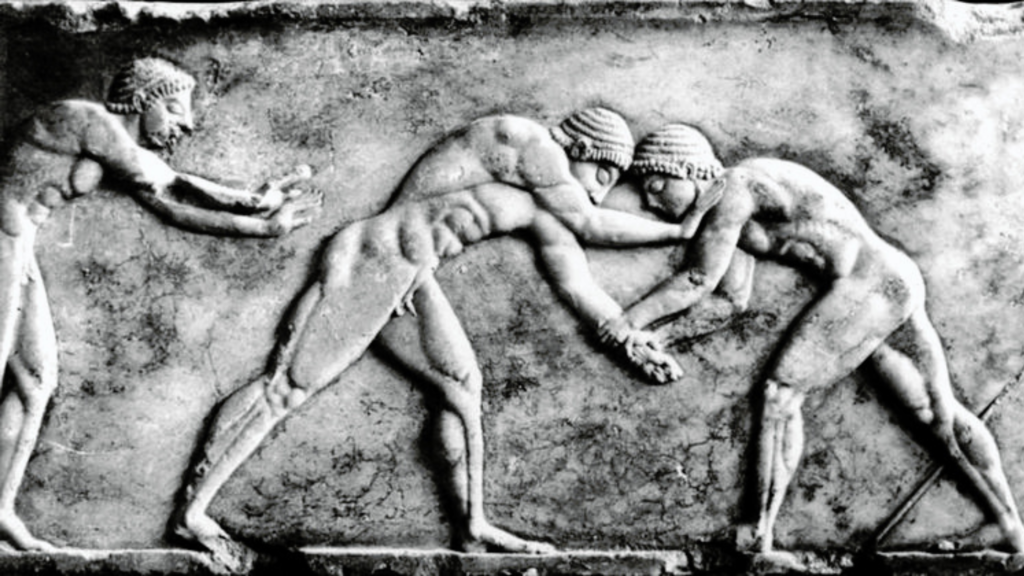
In Greece, nudity was represented through aesthetics. Sparta mandated the wearing of agoge on all males, except for firstborn sons. Athletes were completely naked in public sporting events. Spartan women, along with Spartan men, would go fully nude in public festivals. Interestingly, it was “ordered that the young women should go naked in the processions, as well as the young men, and dance, too, in that condition, at certain solemn feasts, singing certain songs, whilst the young men stood around, seeing and hearing them.”[4] Plutarch n.d. More importantly, there wasn’t “anything shameful in this nakedness of the young women; modesty attended them, and all wantonness was excluded.” [5] Plutarch n.d. This is enough evidence to answer our questions regarding ancient Greece.
I will discover more about ancient civilizations, visit India, Rome, and China, and talk about Judaism, Christianism, and Islam in the next post. Stay tuned!
Works Cited
[1] [2] [3] Asher-Greve, Julia M.; Sweeney, Deborah (2006). “On Nakedness, Nudity, and Gender in Egyptian and Mesopotamian Art“. In Schroer, Sylvia (ed.). Images and Gender: Contributions to the Hermeneutics of Reading Ancient Art. 220. Vandenhoeck & Ruprecht Göttingen: Academic Press Fribourg. doi:10.5167/uzh-139533. Retrieved 15 July 2020
[4] [5] Plutarch (n.d.). “Lycurgus“. The Internet Classics Archive. Translated by Dryden, John. Retrieved 16 August 2017.